How to Remove Oil Stains from Concrete (and What Not to Do)
- Fresh spill: cover it with absorbent granules, leave it, sweep it up. Do not wipe.
- Then apply an alkaline degreaser, let it sit 10 to 15 minutes, scrub with a stiff brush and rinse.
- Old stains need a poultice (absorbent plus degreaser paste) left overnight, often two or three times.
- Hot water pressure cleaning lifts what the rest leaves behind. Cold water mostly spreads it.
- Never hose oily water into the gutter. It is an offence in Queensland and the fine lands on you.
This is a what-to-do-at-home guide. The first thing to do is consult a professional (Jet Set Pro). All surfaces are different, with different porosity and different finishes, and some staining is simply too copious and beyond the realms of applying an absorbent and scrubbing with a poultice. When we are contacted for oil stain removal it is exactly that: a decent amount of oil over numerous and large areas. The best way to remove oil stains from concrete depends on how long the oil has been there. A spill from this morning needs an absorbent, a degreaser and a stiff brush. A stain that has been on the driveway for a year needs a poultice, patience and hot water. Both are fixable. What is not always fixable is the damage people do trying to shift them, which is why half of this article is about what to leave alone.
Concrete looks solid but it is full of tiny pores, and oil is thin enough to travel down into them. Every day a stain sits, it goes a little deeper. That is why timing matters more than product choice.
How to remove a fresh oil spill from concrete
If the oil is still wet, you have the upper hand. The goal in the first ten minutes is to pull as much as possible back out before it soaks in.
- Cover it with an absorbent. Clay-based absorbent granules from an auto shop, or sawdust. Pile it on thick enough that you cannot see the oil.
- Press it in and leave it. Grind the granules in with a boot to crush them, then leave it for at least an hour. Overnight is better.
- Sweep it up and bin it. Do not hose it or wipe it. Wiping smears the oil over a wider area and pushes it into the pores.
- Apply a degreaser. An alkaline concrete degreaser from the hardware store, or a dishwashing liquid with some grunt. Let it sit for 10 to 15 minutes, then scrub with a stiff-bristle deck brush.
- Rinse and check. Rinse with a bucket or low-pressure hose into a garden bed, not the gutter. If a shadow remains, repeat the degreaser step before reaching for anything stronger.
Done within a day of the spill, this removes the stain completely on most plain and exposed aggregate concrete. On a sealed driveway it is even easier, because the sealer has done half the work for you.
How can you remove old oil stains from concrete?
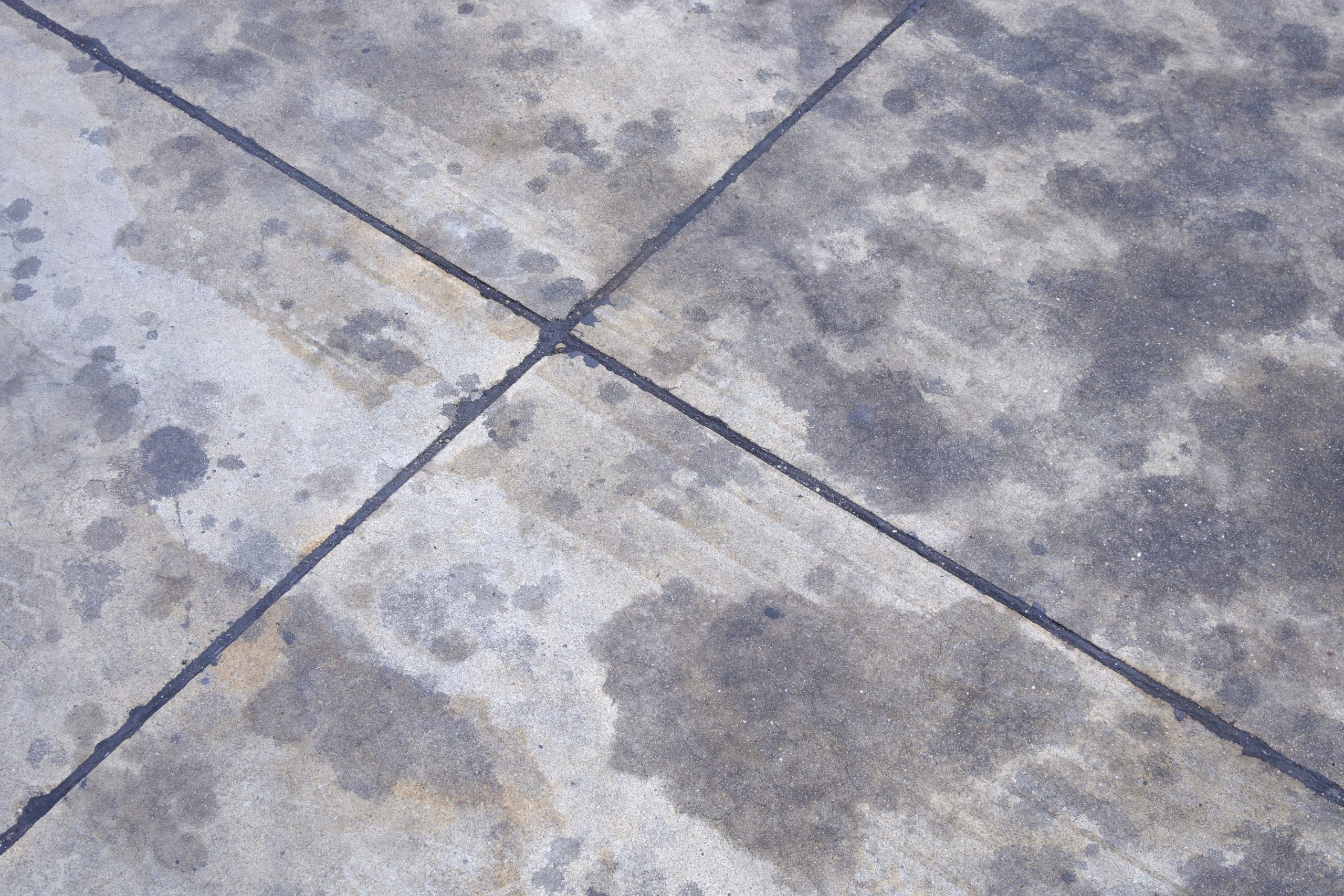
Old oil stains come out of concrete with a poultice: a paste of absorbent material and degreaser that sits on the stain for 12 to 24 hours and draws the oil back up out of the pores. It often takes two or three rounds. Hot water pressure cleaning finishes the job on anything the poultice leaves behind.
Making and using a poultice
Mix an absorbent (absorbent granules crushed to a powder, diatomaceous earth or baking soda) with enough degreaser to make a thick paste, roughly the texture of peanut butter. Spread it over the stain about a centimetre thick and a few centimetres past the edges. Cover it with plastic, tape the edges down, and leave it overnight.
In the morning the paste will have gone dark where it pulled oil up. Scrape it off, bin it, scrub the area with fresh degreaser and rinse. If the stain is lighter but still visible, do it again. Three rounds is normal for a stain that has sat through a Gold Coast summer.
When to bring in hot water
After the poultice has done what it can, the fastest way to lift the last of it is hot water at commercial pressure. Heat softens the bond between the oil and the concrete so the pressure can remove it instead of pushing it sideways. This is the step we do on every driveway and garage floor we clean, and it is why a professional result looks different from a weekend with a hired machine. Our driveway and patio cleaning page explains the process.
What not to do when removing oil stains from concrete
We get called to a lot of driveways where the oil stain is now the second problem. These are the mistakes we see most.
Do not blast it with a pressure washer straight away
A cold-water pressure washer on a fresh spill drives the oil deeper and spreads it wider. You end up with a bigger, paler stain that is harder to treat. Pressure cleaning comes last, after the absorbent and degreaser have done their work, and it works properly only with hot water.
Do not use a turbo nozzle or a zero-degree tip
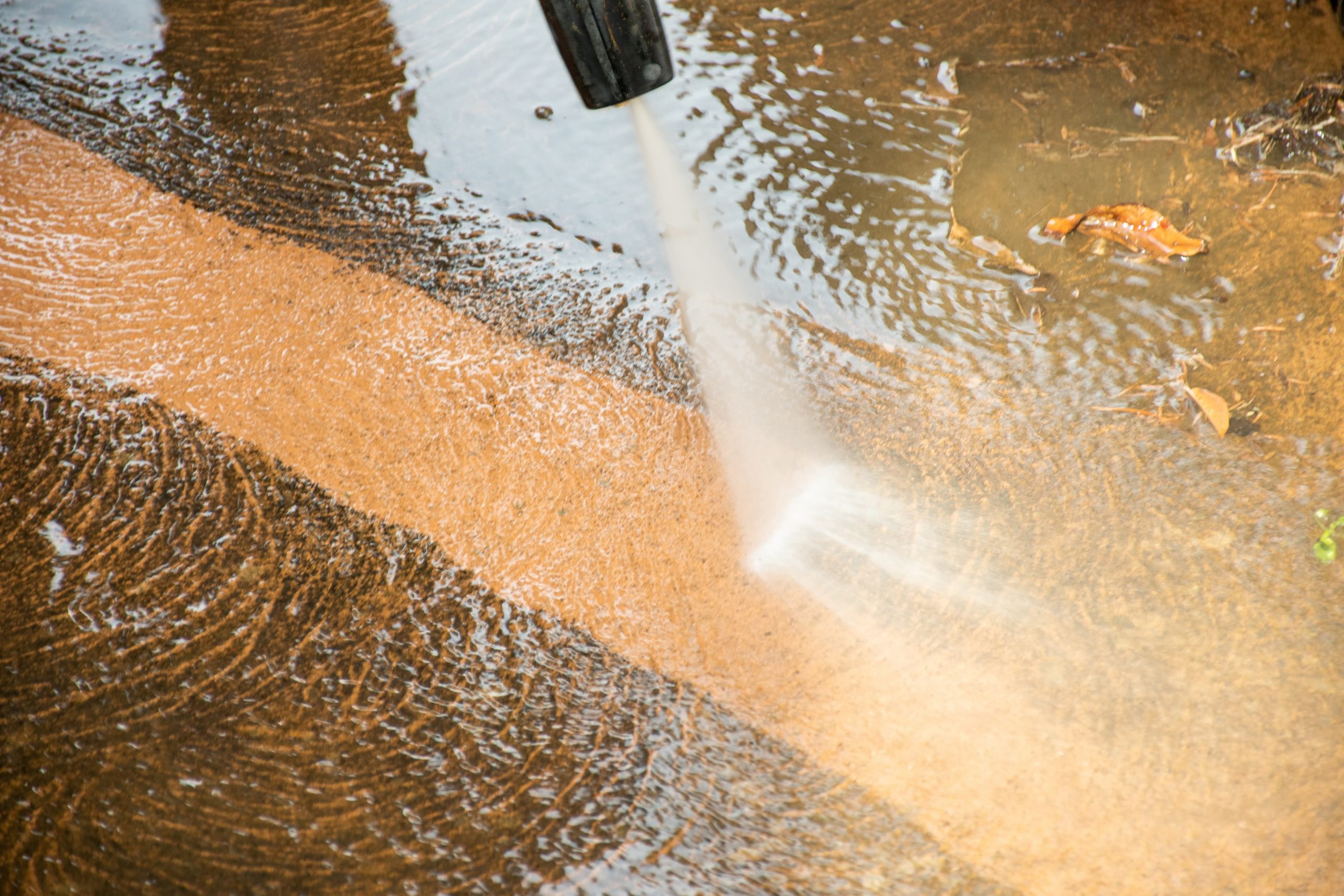
These concentrate the water into a pencil-thin jet that etches concrete, especially older or softer slabs, and leaves a permanent pale patch that will never match the rest. Use a wide fan nozzle or a surface cleaner, and keep the wand moving.
Acid is an absolute last resort
Acid can be used to remove oil stains, but it is an absolute last resort. It does not work by breaking down the oil. It removes the stain by etching the surface of the concrete, taking the top layer of cream away and the stained concrete with it. Used on one spot, you are replacing one mark (the oil stain) with another (an etched section of concrete). In that scenario we recommend a full acid wash to the entire area so there is no etched section that stands out.
Do not hose the run-off into the gutter
Stormwater drains on the Gold Coast run straight to the creeks and the Broadwater with no treatment. Under Queensland’s Environmental Protection Act 1994, allowing oily or detergent-laden wash water to enter stormwater drains or roadside gutters is an offence that attracts a fine. Rinse small jobs into a lawn or garden bed. For a whole driveway, the wash water needs to be bunded and pumped out, which is what we do on every job.
Do not try petrol, kerosene or thinners
They thin the oil, which just helps it travel deeper into the slab, and they leave a flammable puddle on your driveway. Leave the solvents in the shed.
How to stop the stain coming back
Once the concrete is clean, sealing it is the best thing you can do. A penetrating sealer fills the pores so the next drip sits on top where you can wipe it up. We seal a lot of driveways straight after a clean for exactly this reason, and our driveway and patio cleaning page covers the options.
Beyond that, put a drip tray under any car known to leak, fix the leak, and keep a bag of absorbent in the garage so a spill gets covered in the first minute instead of the first week.
Frequently Asked Questions
Can you remove an oil stain from concrete that has been there for years?
Usually, yes. A stain that old will not scrub off because the oil is deep in the pores. A degreaser poultice left overnight, repeated two or three times, draws most of it back up, and hot water pressure cleaning lifts the rest. In our experience the majority of old stains disappear or fade to a faint shadow that is not noticeable from the street.
Can I pour the dirty water down the stormwater drain after cleaning my driveway?
No. On the Gold Coast, stormwater goes straight into local creeks and the Broadwater without treatment. Letting oily or soapy wash water reach a drain or gutter is an offence under the Environmental Protection Act 1994. For a small spot, rinse into a lawn or garden bed. For a full driveway clean, the run-off needs to be contained and pumped out.
When should I call a professional for oil stain removal?
Before you start, ideally. We look at the surface, its porosity and finish, and the size and age of the staining before recommending anything, and quotes are free. As a rule, a single fresh drip on a plain driveway is something you can tackle at home with the steps above. Multiple stains, large areas, old staining, or any sealed, coloured, honed or exposed aggregate surface is a job for us. Call 0482 702 903 or request a quote online.
Will acid remove an oil stain from concrete?
It can, but it is an absolute last resort. Acid does not break down the oil. It etches the surface of the concrete and takes the top layer of cream away, and the stained concrete goes with it. Used on one spot, that leaves an etched patch that stands out, so you have swapped an oil stain for a different mark. If acid is the only option left, we recommend a full acid wash across the entire area so the finish is even. Talk to us before going down that path.
About the Author
Stuart, Owner, Jet Set Pro Exterior Cleaning Solutions
Stuart owns and runs Jet Set Pro Exterior Cleaning Solutions, a family-run exterior cleaning business on the Gold Coast. He and his team clean driveways, garage floors, roofs, gutters and house exteriors across the Gold Coast, South Brisbane and the Tweed, and lift oil stains out of concrete most weeks of the year.
If you would rather skip the poultice and the scrubbing, call Jet Set Pro on 0482 702 903 or request a free quote online. We remove oil stains from driveways, garage floors and loading docks across the Gold Coast, South Brisbane and the Tweed, with hot water and all run-off captured.